At-Home Lymphatic Drainage for Lipedema: A Realistic Guide
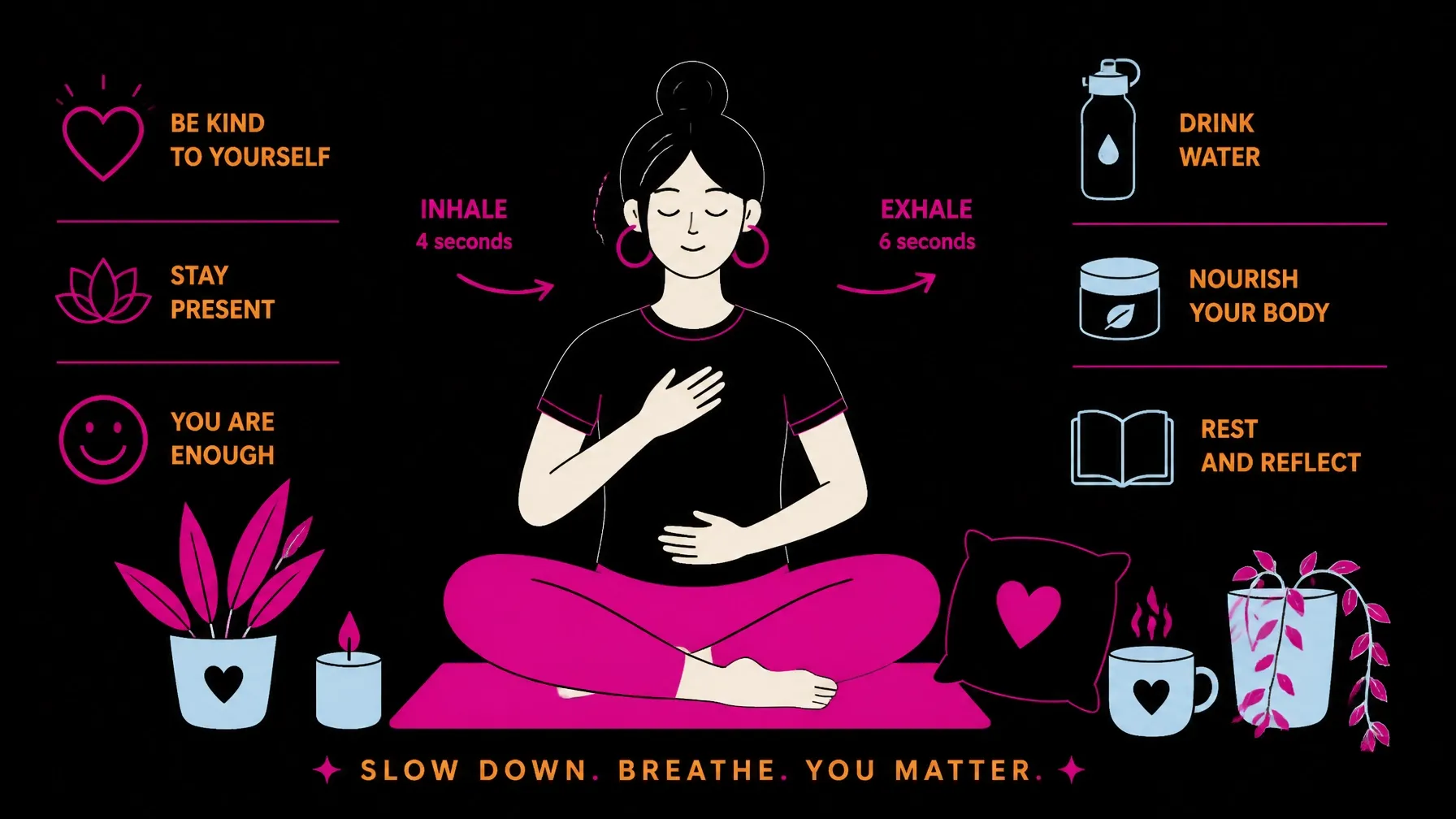
What low-energy home care can support, where its limits are, and how to make room for changing capacity.
Living with late-stage Lipedema can mean that capacity changes from one day to the next, or even within the same day. A plan that fits on Monday may not fit on Thursday. Getting across town for an appointment may be out of reach when pain, heaviness, swelling, or fatigue is high.
So, can you really do lymphatic drainage at home? Yes, some gentle self-care practices may support comfort and daily function. They are one part of a larger care picture, with clear limits.
What at-home lymphatic care can and cannot do
Clear boundaries matter. At-home care is not a test of discipline, and a low-capacity day is not a personal failure.
What it may support
- Comfort: Light, gentle contact may help you notice and respond to feelings of surface tension or heaviness.
- Daily function: Brief practices can create a manageable pause during long periods of sitting or resting.
- Body awareness: A simple routine can help you notice how your body is responding without turning that information into a pass-or-fail score.
What it cannot replace
- Professional assessment: A qualified healthcare professional or manual lymphatic drainage practitioner can consider your health history, tissue changes, symptoms, and other care needs.
- Individualized guidance: Home instructions cannot account for every condition, medication, surgery, or change in swelling.
- A change in the underlying condition: At-home care does not cure or reverse Lipedema. It is a supportive practice, not a promise about disease biology.
At-home care does not replace professional care. It can sit alongside appropriate support when that combination makes sense for you.
Evidence framework
WHAT THE RESEARCH SAYS TODAY
Gentle at-home lymphatic self-care and low-impact movement may support comfort, circulation, and daily function; professional manual lymphatic drainage is an established component of Lipedema care. Read the 2024 Lipedema consensus statement.
How much at-home self-care helps, and which movement and pacing strategies work best at different Lipedema stages, is still being studied.
A specific at-home routine changes the underlying biology of Lipedema. This has not been established.
At-home care cures, reverses, stops the progression of, or eliminates Lipedema.
Simple principles for self-lymphatic care
If a qualified professional has told you that gentle self-care is appropriate, keep the approach light, slow, and easy to stop. The point is not to press harder or create a dramatic sensation.
- Use light contact. Lymphatic techniques work at the surface of the skin. Deep pressure is not better.
- Keep the pace unhurried. Slow, comfortable movements give you time to notice tenderness, swelling, or fatigue.
- Stay within the guidance you were given. A general article cannot map the right direction or sequence for every body.
- Stop when your body says stop. Sharp pain, a noticeable increase in swelling, dizziness, or feeling unwell is a reason to pause and seek guidance.
A gentle sequence for low-energy days
When energy is scarce, a short sequence from a supported position may be more realistic than a long routine. You can also choose one step and leave the rest for another day.
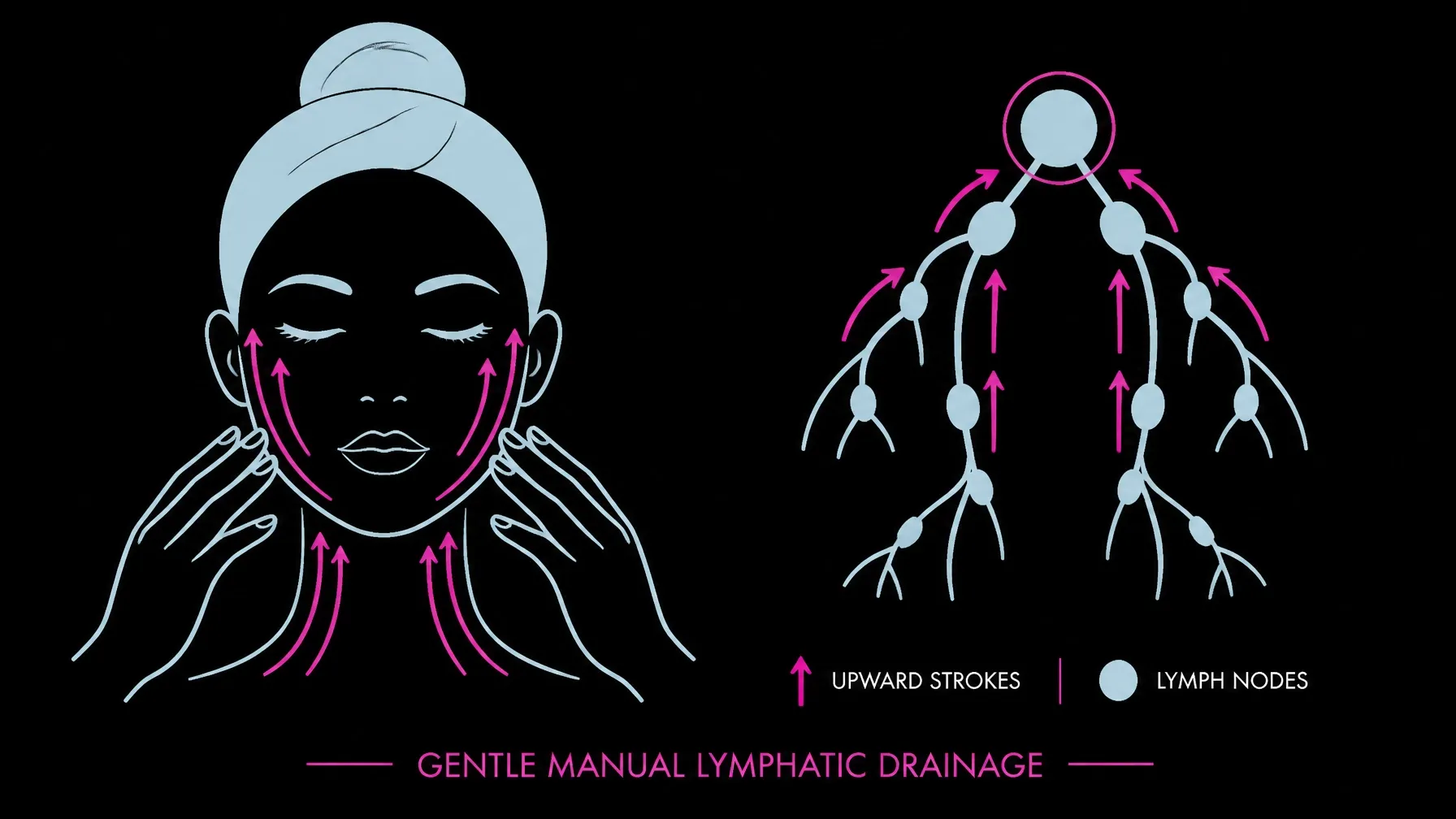
Step 1: Settle your breathing
- Recline in a supportive chair or lie down in a comfortable position.
- Let your hands rest lightly on your abdomen if that feels comfortable.
- Take a few slow breaths without forcing the inhale or exhale.
Step 2: Use only the light contact you have been shown
- If a qualified practitioner has shown you a self-lymphatic sequence, follow that guidance rather than adding pressure or extra steps.
- Keep the motion gentle and stop if the area becomes painful or more swollen.
Step 3: Finish without making it a performance
- Take a few comfortable breaths, change position slowly, and notice how you feel.
- There is no requirement to complete a set number of minutes for the practice to count.
Movement for Fluctuating Capacity
Gentle movement can support the muscle pump that contributes to circulation. The useful question is not “How much can I push?” but “What kind of movement fits the capacity I have today?”
On low-capacity days, seated or supported movement may fit better than a high-intensity routine. These are gentle options to explore within a comfortable range, not a demand to perform:
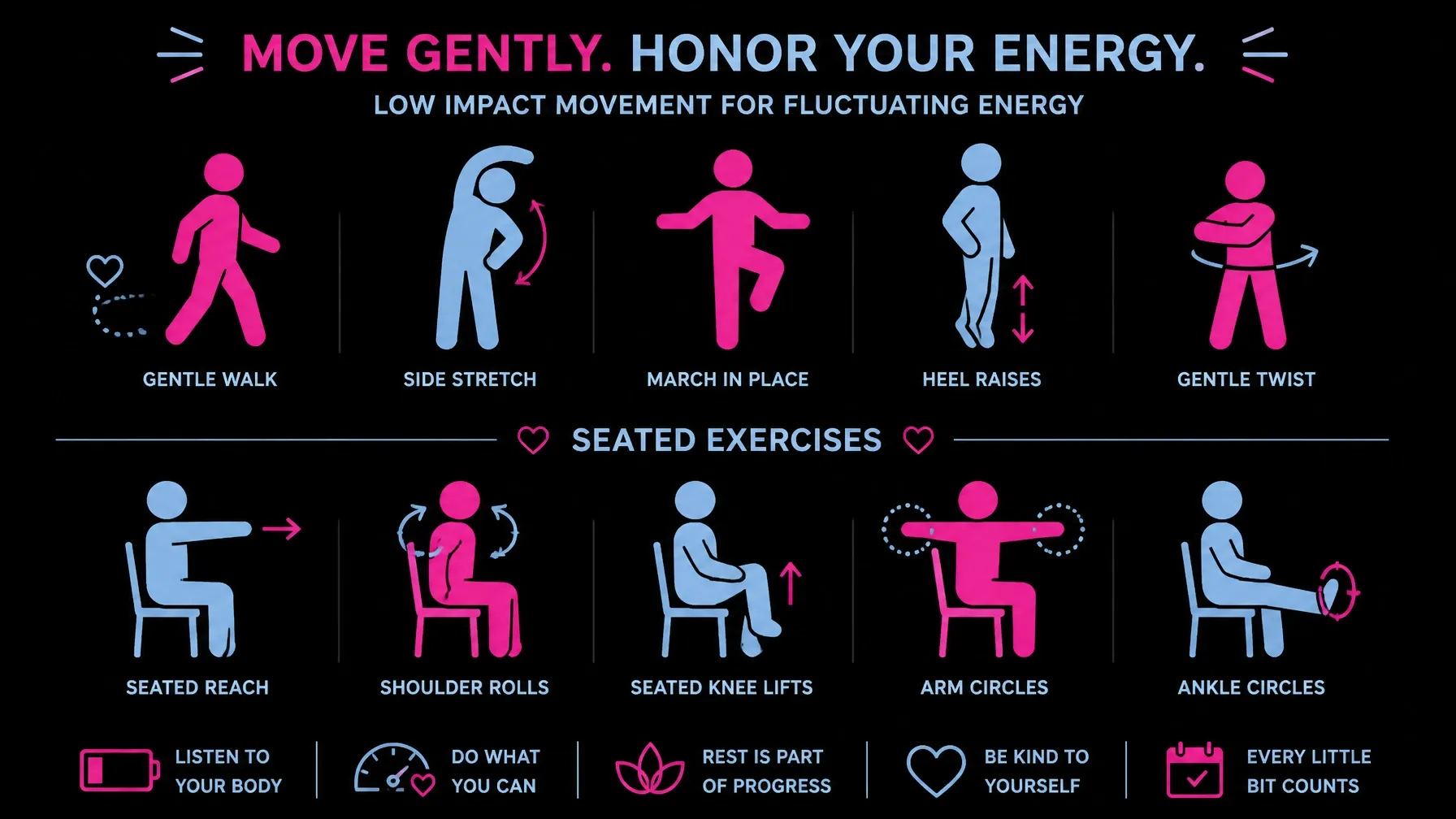
- Ankle pumps: While sitting or lying down, gently point and flex your feet within a comfortable range.
- Seated marching: Lift one knee a small amount, lower it, and switch sides only if that feels steady and comfortable.
- Knee extensions: From a supported seat, slowly straighten one leg and lower it without forcing the range.
- Gentle seated twists: Turn your torso a small amount from side to side while breathing comfortably.
Safety note: Stop if movement causes sharp pain or increased swelling. Rest, change position, or ask a qualified healthcare professional for individualized guidance.
For more context on capacity-centered language, read why Core & Curve Lab uses movement language. The MovementTracks™ guide for low-energy days and the article on the push-crash cycle add practical context for changing capacity.
Why professional support still matters
Professional support can add assessment, individual context, and a second set of eyes when symptoms or capacity change. Manual lymphatic drainage from a qualified practitioner is different from a general at-home routine, and neither replaces the role of your healthcare team.
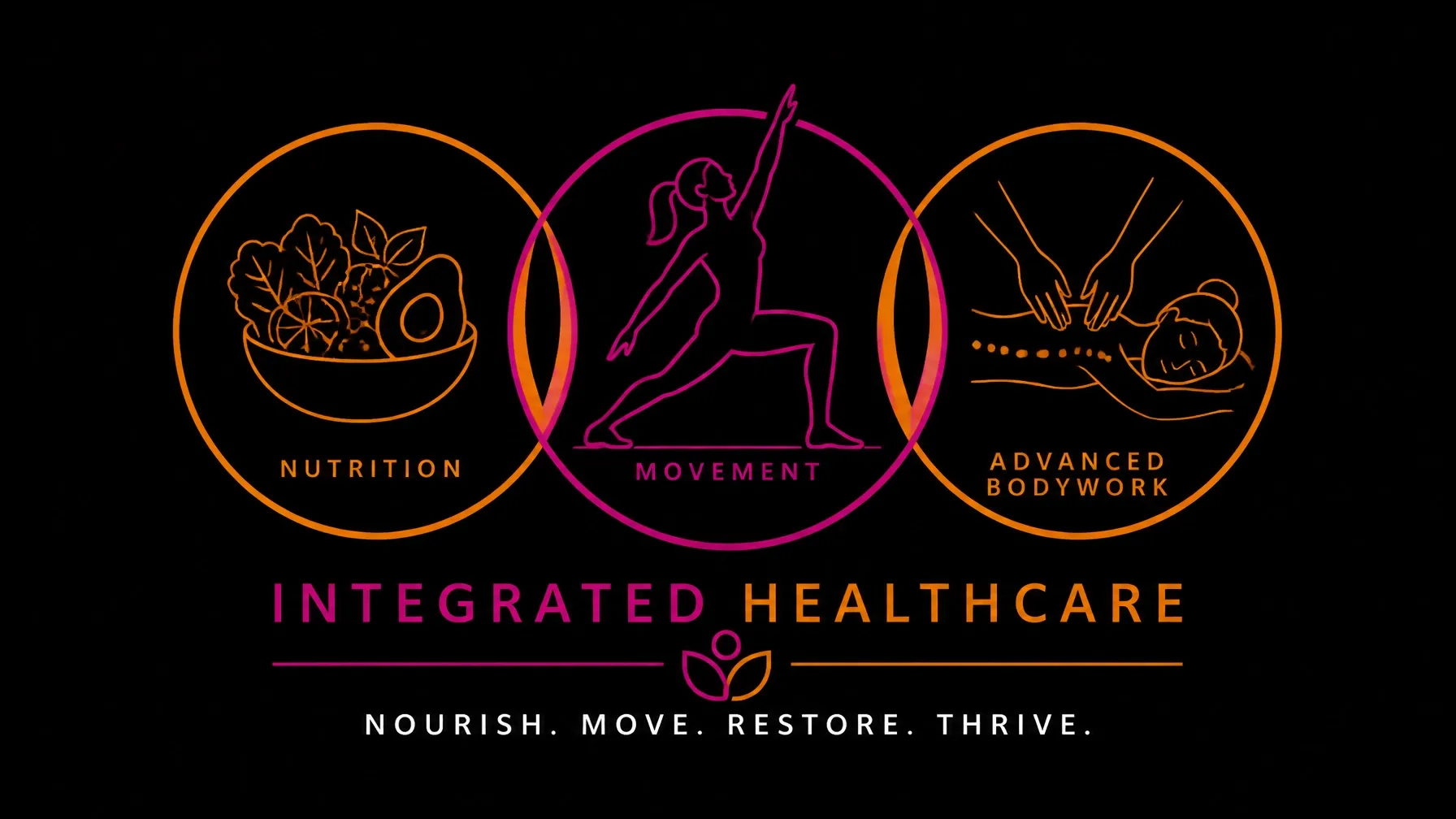
The Core & Curve Lab ecosystem covers education across three connected areas:
- Nutrition Counseling: education about nourishment that respects energy, access, symptoms, and the limits of diet culture.
- MovementTracks™: education about movement options that can scale with changing capacity.
- Bodywork Treatments: education about how professional bodywork and manual lymphatic support fit into a broader care conversation.
These areas are part of an integrated model, not a substitute for medical care or a promise that one system can answer every need. For related nutrition context, read the late-stage Lipedema nutrition guide. You can also read about rest and Stage 4 Lipedema and what the 2026 GLP-1 and Lipedema study actually found.
Learn more about the Core & Curve Lab ecosystem.
Medical and educational disclaimer
MEDICAL AND EDUCATIONAL DISCLAIMER
This article is general education only, not medical treatment, diagnosis, or individualized guidance. Speak with a qualified healthcare professional before beginning or changing a care or movement plan.