Why We Say “Movement” (Not “Exercise”) at Core & Curve Lab
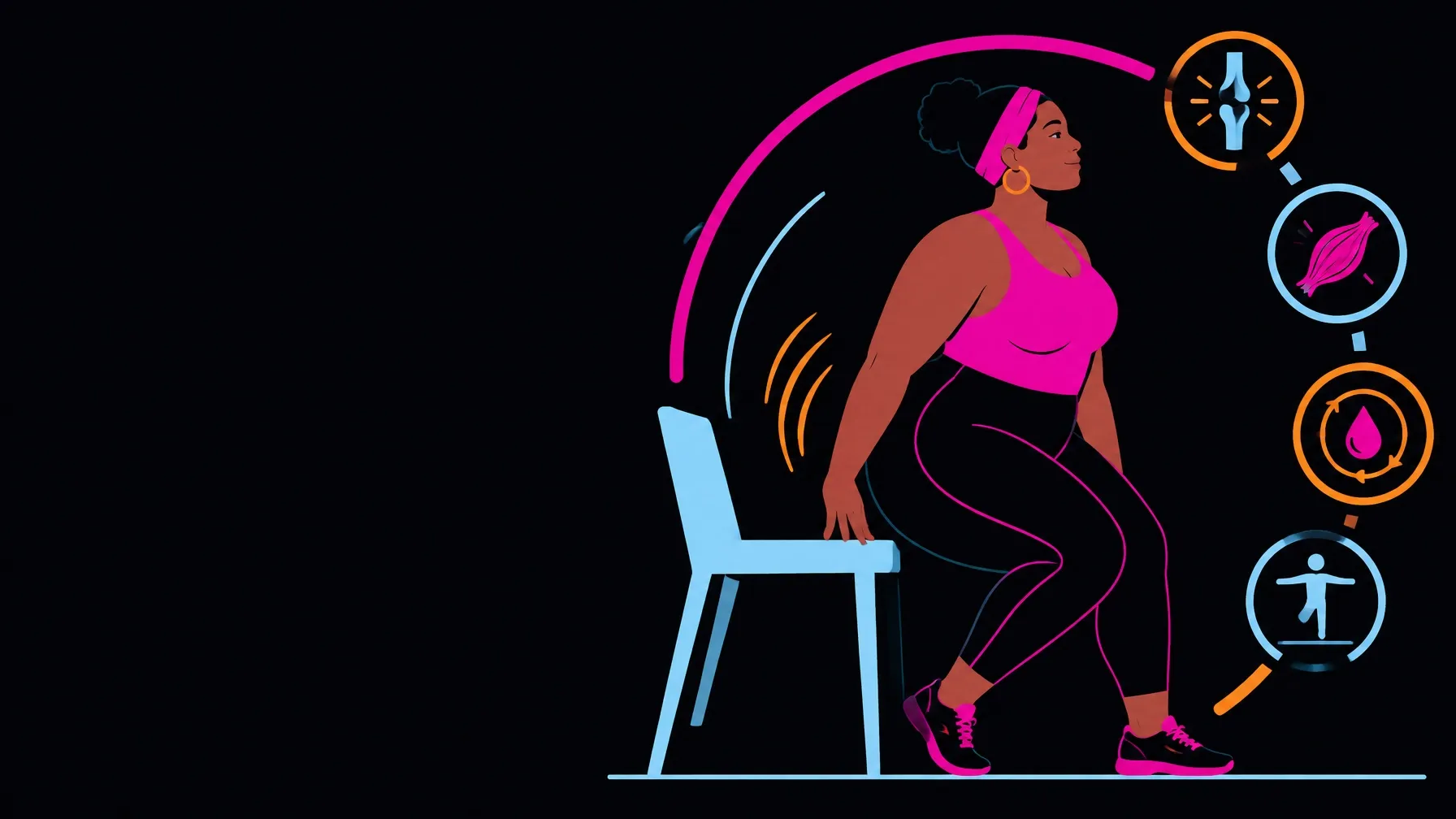
Adaptive movement coaching for women with late-stage Lipedema and fluctuating capacity.
A woman with late-stage Lipedema can hear the word “exercise” and feel the pressure arrive before she has even moved.
The pressure to push through. To burn calories. To earn food. To shrink her body. To ignore pain. To prove she is trying hard enough.
For many women, the word carries years of diet culture and fitness messaging: “no excuses,” “burn,” “shred,” “summer body,” or the rejected message, “just lose weight.”
That language does not meet women where they are. It often makes movement feel like another test to fail.
So we use a different word.
We say movement.
Why the word “exercise” fails so many women
Traditional health plans often assume stable capacity. They assume you can follow the same schedule, use the same intensity, and perform the same routine every day.
But bodies do not work that way, especially bodies living with late-stage Lipedema, pain, heaviness, swelling, joint strain, fatigue, or limited mobility.
Capacity can change because of:
- Pain or tenderness
- Heaviness in the legs or arms
- Swelling and tissue sensitivity
- Sleep and stress
- Recovery from a demanding day
- Mobility limitations
- Cognitive or emotional load
- Other chronic health needs
A plan that works on Monday may not fit on Thursday. That does not mean you are lazy, inconsistent, or unmotivated.
It means your capacity changed.
Movement should not become another place where a woman is blamed for having a body with real needs.
At Core & Curve Lab, we do not use movement as punishment. We do not use it to earn food or demand that a body become smaller. We do not encourage pushing through pain or exhaustion.
Instead, we ask a more useful question:
What we mean by movement
Movement is an opportunity to stay connected to your body. It can be seated, standing, supported, slow, brief, restorative, or strength-focused.
It can happen in a chair. It can happen beside a bed. It can happen in a few minutes between daily responsibilities.
Seated movement is real movement.
Movement on a low-capacity day counts.
Rest and recovery count, too.
The purpose is not to perform for approval. The purpose is to support function and quality of life in ways that respect the body you have now.
Movement may support:
- Muscle preservation and strength
- Joint comfort and support
- Mobility and range of motion
- Balance and gait
- Circulation and lymphatic flow
- Confidence with daily tasks
- Mental health and mood
- Future independence
Evidence framework · Movement goals and capacity
WHAT MOVEMENT CAN SUPPORT
Movement may support:
- Muscle preservation and strength
- Joint comfort and support
- Mobility and range of motion
- Balance and gait
- Circulation and lymphatic flow
- Confidence with daily tasks
- Mental health and mood
- Future independence
The research on Lipedema often uses the word “exercise” to describe structured physical activity. That research suggests that appropriately adapted activity may support strength, walking capacity, symptoms, quality of life, and lymphatic or venous circulation.
A specific movement routine should change the underlying biology of Lipedema. This has not been established.
Movement cures, reverses, or eliminates Lipedema.
These goals matter at every size. They matter whether the scale changes or not.
The research on Lipedema often uses the word “exercise” to describe structured physical activity. That research suggests that appropriately adapted activity may support strength, walking capacity, symptoms, quality of life, and lymphatic or venous circulation. It also makes clear that the studies are still limited, varied, and not always specific to women with advanced Lipedema.
Our language is not a rejection of the value of physical activity. It is a rejection of the shame and narrow expectations often attached to the word “exercise.”
Evidence framework · Movement and Lipedema
WHAT THE EVIDENCE SAYS
Adapted physical activity can support muscle function, mobility, circulation, and quality of life. A 2024 consensus statement on Lipedema discusses the potential value of strength, aquatic, low-impact, and individualized physical activity while also calling for more research. Read the consensus statement.
Researchers are still working to understand which types, amounts, and pacing strategies are most helpful for different Lipedema stages, including late-stage disease.
A specific movement routine should change the underlying biology of Lipedema. This has not been established.
Movement cures, reverses, or eliminates Lipedema.
Movement is support. It is not a promise to fix your body.
Movement that meets the day you are actually having
MovementTracks™ is the adaptive movement system within the Core & Curve Lab™ ecosystem.
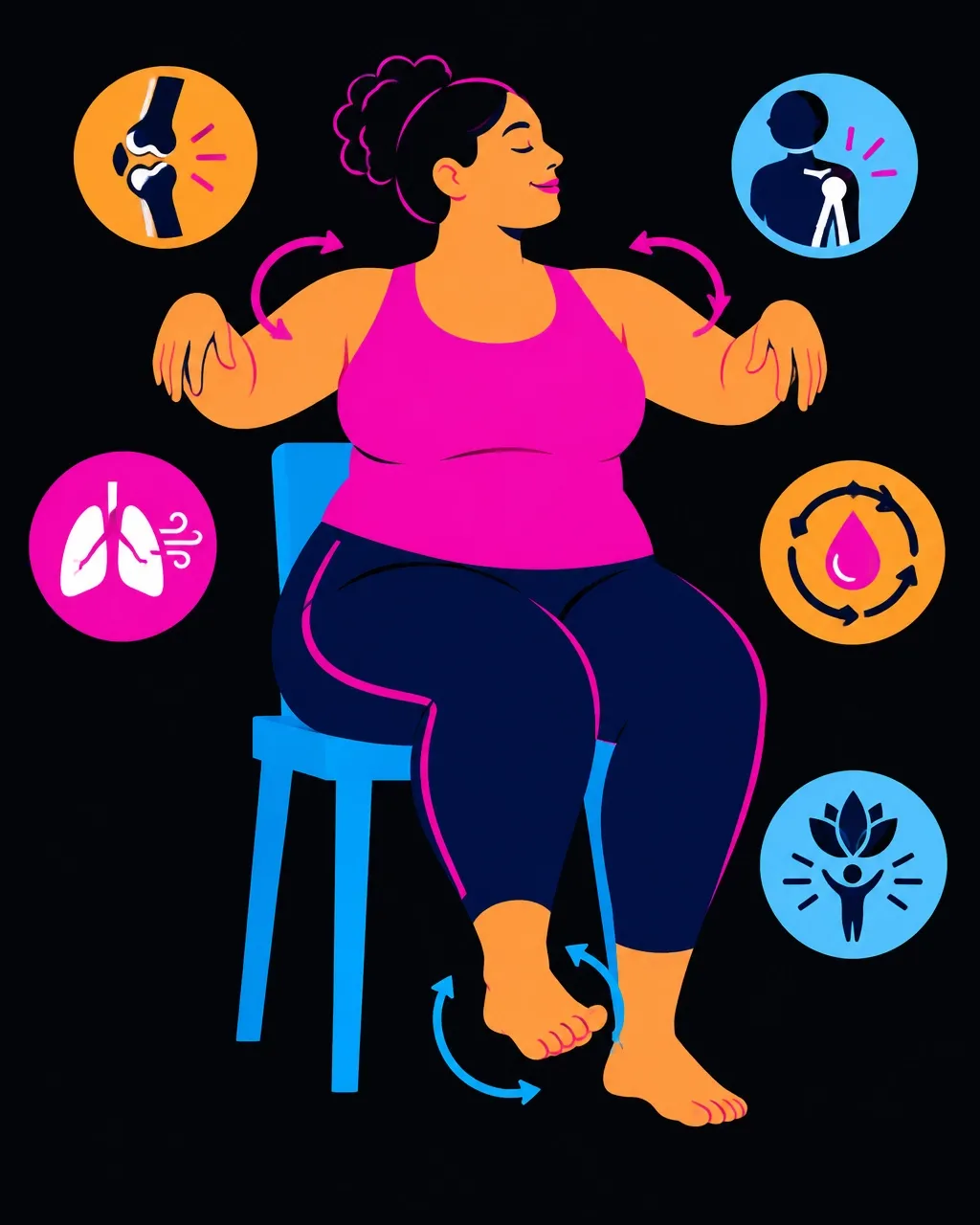
It offers seated and standing options across six areas:
- Joint Mobility
Gentle ways to explore movement around the joints and reduce the feeling of being stuck. - Core-Supported Mobility
Movement that builds awareness and support through the center of the body without demanding a traditional floor-based routine. - Lymphatic Circulation
Rhythmic, low-impact movement and breathing patterns designed to support circulation. - Lymphatic Drainage
Gentle movement options that complement broader lymphatic care and body awareness. - Strength
Scalable ways to maintain and build useful strength for everyday life. - Gait and Grounding
Support for balance, foot awareness, weight shifting, and the movements that help you navigate the world.
MovementTracks™ is designed to adapt. A session may look different on a Build day than it does on a Stabilize day. A Restore day may call for smaller movements, more support, or complete rest.
The goal is not to force the body through the same routine. The goal is to create a reliable way to listen and respond.
That is the heart of capacity-centered movement.
Build, Stabilize, Restore
A capacity-based approach can help you move away from the push-crash cycle.
On a Build day, you may have more available capacity. You might choose supported strength work, gait practice, or a longer standing sequence.
On a Stabilize day, the goal may be to maintain what is working. Shorter movement, seated options, or a familiar sequence may be enough.
On a Restore day, you may focus on breath, joint mobility, gentle circulation, or rest. There is no need to turn recovery into another performance.
This does not mean giving up. It means using better information.
A low-capacity day is still part of your wellness journey. Rest is not the opposite of progress. Recovery helps make a sustainable plan possible.
The muscle question
Movement is not only about weight loss.
This becomes an especially important educational conversation for women using GLP-1 medications or experiencing significant weight loss. When body weight changes, the scale cannot tell you exactly what changed.
It does not show the full difference between:
- Fat mass
- Lean tissue
- Muscle
- Fluid
- Body composition
- Functional strength
A 2024 meta-analysis of randomized trials in adults with diabetes or higher body weight found that GLP-1-based medications reduced total weight and fat mass, while lean mass also decreased. Lean mass made up approximately one-quarter of the total weight lost in the included studies. This research was not specific to women with Lipedema, so it should not be treated as Lipedema-specific evidence. Read the meta-analysis summary on PubMed.
Evidence framework · Muscle and function
THE MUSCLE QUESTION
Body composition matters. Weight loss is not the same as preserving strength or function.
More research is needed on muscle preservation during medication-supported weight loss, particularly for women with Lipedema, older women, and women with advanced mobility limitations.
A lower number on the scale automatically means better mobility, better strength, or better health.
The question is not simply, “How much weight did she lose?”
Movement belongs in that conversation because muscle helps support joints, gait, balance, daily tasks, and future independence. It also gives women a way to pay attention to function instead of using body size as the only measure of progress.
This is educational information, not medical advice. Medication decisions, nutrition needs, strength concerns, and changes in mobility should be discussed with qualified healthcare professionals who understand your individual history.
Movement can be kinder and still purposeful
You do not have to punish your body to care for it.
You do not have to wait for a smaller body to deserve strength, mobility, comfort, or support.
You can begin with the movement available today:
- A few ankle circles
- A supported change of position
- Gentle shoulder mobility
- A seated breathing practice
- One careful sit-to-stand, if appropriate for you
- A short walk across the room
- Rest, when rest is what your body needs
These are not lesser choices. They are entry points.
Core & Curve Lab combines nutrition, MovementTracks™, and bodywork and lymphatic care to support women with late-stage Lipedema through a more integrated model. You can learn more about the Core & Curve Lab ecosystem.
Follow for MovementTracks™ previews and education.
Medical and educational disclaimer
MEDICAL AND EDUCATIONAL DISCLAIMER
This article is for general education only. It is not medical treatment, diagnosis, or individualized movement guidance. Movement may not be appropriate for every person or every condition. Speak with a qualified healthcare professional before beginning or changing a movement plan, especially if you have significant pain, swelling, dizziness, balance concerns, recent surgery, or other medical needs.